HortNZ Opens Applications for 2026 Leadership Programme Scholarships
Horticulture New Zealand (HortNZ) is inviting applications for scholarships places on its 2026 Leadership Programme.
 increase font size
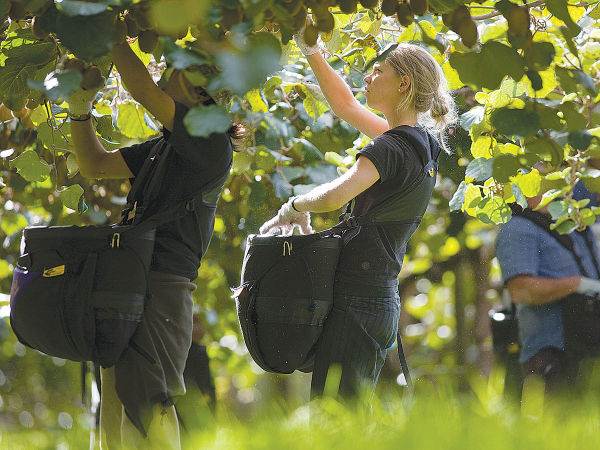 Horticulture NZ says there is nothing to celebrate in the recent government decision to lift the number of RSE workers by only 500.
Horticulture NZ is scathing about the last gasp announcement by Labour to lift the Recognised Seasonal Employer (RSE) by just 500 workers.
"Horticulture has nothing to celebrate in the announcement. It does not recognise the important part horticulture plays in strengthening New Zealand economy," says Horticulture NZ chief executive Nadine Tunley.
Her comments came in reaction to Immigration Minister Andrew Little's recent announcement to increase the RSE cap by only 500 people to 19,500.
"This decision does not give growers confidence to continue to invest as they go into the next harvest season," Tunley adds. "Horticulture has plenty of work available for Kiwis and our Pacific partners. This work creates jobs for New Zealanders and boosts the economy."
She added that other political parties had recognised the importance of the sector and committed to much larger increases in RSE access.
"Our growers need a government that understands our requirements, will help us grow sustainably and meet the needs of our domestic and export markets," Tunley says. "We are watching policy commitments closely and will work with any government that is committed to helping our growers and the wider sector."
She points to the work done by HortNZ earlier this year when it acted with government to set the Aotearoa Horticulture Action Plan.
"We set an aspirational direction for the horticulture sector and the goal of a long-term policy to assist existing horticulture businesses and new entrants too have the confidence to invest in and grow the sector, in doing so contributing significantly to the growth of the New Zealand economy," Tunley adds.
"The cap increase announcement fails that challenge. Industry requested the cap be increased by 1,600 to accommodate employers' requests for the coming season."
Meanwhile she says it is disappointing that the RSE policy review has not progressed, but instead stalled within the bureaucracy of Wellington.
"Industry has been working closely with our Pacific partners and government for years to progress the policy review to enable certainty. We, like the Government, are focused on prioritising workers' wellbeing and the long-term sustainability of the scheme. This further lack of progress is creating more uncertainty for growers."
Tunley says the horticulture industry is eager to work with government on the implementation of the policy to make swift and practical progress in improving the RSE scheme.
"Starting with the most pressing issues that will have the most benefit to our growers as well as Pacific countries that are part of the RSE scheme."
Horticulture New Zealand (HortNZ) is inviting applications for scholarships places on its 2026 Leadership Programme.

We are encouraged that employers are already engaging with two new visas for seasonal workforce recruitment.
The horticulture sector is under threat because of vulnerabilities of the country's transport infrastructure, according to a report commissioned by a collective representing a range of groups in the sector.
Horticulture New Zealand (HortNZ) has added its perspective to numerous primary sector voices urging the Government to strengthen its draft legislation to replace the Resource Management Act (RMA).
Trainees in the horticulture industry studying towards a certificate or diploma can now apply for Horticulture New Zealand's (HortNZ) 2026 Industry Training Scholarships programme.

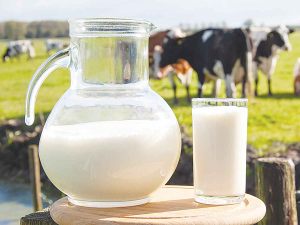
New Zealand dairy farmers are set to be the first in the world to receive access to a new digital physical milk pricing tool that enables them to fix the price for their physical milk.
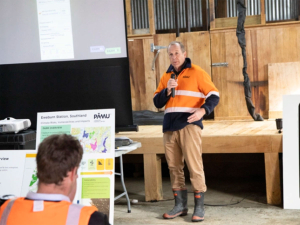
State farmer Pāmu is opening its farm gates this summer in an effort to give the rural sector the opportunity to see how large-scale, multi-system farming is delivering productivity and profitability across New Zealand.
A five-year study has found that the cost of reducing emissions without technology may be significant and unsustainable for Northland dairy farmers.
DairyNZ says Waikato farmers need certainty on Plan Change 1, but they say that certainty must be matched with practical, workable rules and a clear transition that doesn't get ahead of the new resource management system currently under review.
While the Government has moved quickly to make commercial hauliers' lot easier during the current fuel crisis, they appear to be stuck in the creep box when it comes to the agricultural industry.
Waikato farmers have been told that the Government’s new planning system legislation and the region’s Plan Change 1 (PC1) “won’t mesh together very well”.