Precision N application test costs 'outweigh returns'
Precision application of nitrogen can improve yields, but the costs of testing currently outweigh improved returns, according to new research from Plant and Food Research, MPI and Ravensdown.
 increase font size
 Sharon Kirk says new apricot varieties especially bred to give the NZ industry a shot in the arm are looking “amazing” in their first full commercial season.
New apricot varieties especially bred to give the New Zealand industry a shot in the arm are looking “amazing” in their first full commercial season, says grower Sharon Kirk.
The new varieties, known as Nzsummer2, Nzsummer3 and Nzsummer4 – along with other trial cultivars – have been developed by Plant and Food Research specifically for the Central Otago growing region.
With an eye to improved flavour, colour and shelf life, around 50ha of the new apricots have now been planted. About half of that on Ardgour Valley Orchards, recently established on the Jolly family’s sheep and beef Ardgour Station, at Tarras.
Ardgour Valley Orchards director Sharon Kirk says the trees, planted over the last three years, were now in their first full harvest season, with a yield of about 80 tonnes expected.
She says the apricots ware looking “amazing.”
“The first of them has now gone through to the Auckland market and we’re just gearing up to go to export now.”
Kirk says the new varieties are highly “blushed” – so deeply coloured they may be mistaken for peaches at a glance.
The fruit is also getting Brix measurements of 14 to 21, “which is actually very high for an apricot”. A standard measure of dissolved solids in the juice, a Brix figure roughly corresponds to sugar percentage. Kirk says normal apricots usually sit between 7 and 14. Meanwhile, an ethylene-recessive gene improves their shelf life, making them ideal for export.
First exports would soon be going to Dubai.
The fruit is also available domestically by online order from Kirk’s Southern Fruits International website.
She adds that the new varieties don’t present any unusual difficulties to grow but they’re still determining when it’s best to harvest, and optimum parameters for storage and handling.
“You harvest them then you sit them for 24 hours in ambient and so it’s just working out how to do that,” Kirk told Hort News. “We’re learning that all as we go.”
While Ardgour is the biggest grower so far, Kirk says another 20 orchards have plantings of the new varieties.
They are not jointly marketing the fruit, but Kirk says they share information through a grower cooperative that handles the varieties.
“We are all still learning, and it’s a matter of just seeing how things go and what we need to learn, comparing it, and seeing if we can improve for the next year.”
By next season, they intend replacing the “Nzsummer” label with a new name and branding, following market feedback.
Precision application of nitrogen can improve yields, but the costs of testing currently outweigh improved returns, according to new research from Plant and Food Research, MPI and Ravensdown.

Apricots from New Zealand’s largest Summer series exporter, Ardgour Valley Orchards, burst onto the world stage and domestic supermarket shelves under the Temptation Valley brand last month.
Later this month, Ardgour Valley Orchards apricots will burst onto the world stage and domestic supermarket shelves under the Temptation Valley brand.
Spring is the perfect time to re-set your eating habits and colourful in-season fruit and vegetables are the key to success, offering unbeatable value.
Nutritionists are urging Kiwis to kickstart their day with a piece of fresh fruit to help improve their health and wellbeing this autumn.



Federated Farmers says it welcomes Labour's commitment to reviewing the Sharemilking Agreements Act, calling on other major parties to do the same.
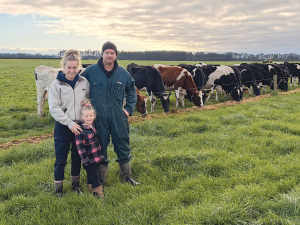
For Canterbury dairy farmers Sian Meijer and Rick Wobben, wearable technology has become one of their most valuable on-farm tools - helping manage 1850 cows across an expansive, high-performing dairy operation while improving efficiency, mating outcomes and day-to-day decision making.
Fonterra has unveiled its annual results for the 2026 financial year, posting $27 billion in revenue and close to $20 billion returned to New Zealand farmer owners and unit holders.
The first major update to the Dairy Cattle Code of Welfare in more than a decade has been released, marking what DairyNZ describes as an important step in ensuring animal welfare standards continue to evolve alongside scientific evidence and on-farm realities.
Ravensdown shareholders have elected Jane Montgomery and Kate Acland to the Ravensdown Board for three-year terms, following a closely contested director election.
Federated Farmers says new legislation replacing the Resource Management Act will cut red tape, unlock investment and help grow New Zealand's export-led economy, after the Planning Bill and Natural Environment Bill passed their third reading in Parliament yesterday.