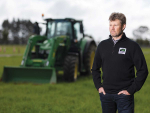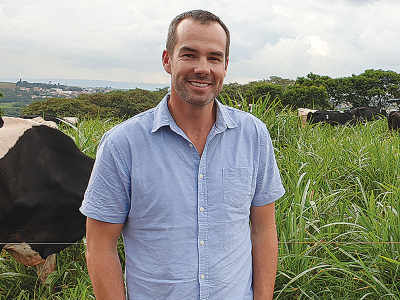

Dairy farmer Cam Henderson, of North Canterbury, spent eight weeks looking at farming practices in the US, Mexico, Brazil, the Netherlands and NZ.
Henderson owns and runs a 750 cow dairy farm near Oxford, is on the Waimakariri zone committee which sets local environmental limits, and is Federated Farmers’ North Canterbury provincial president.
“In New Zealand, regulation encourages farmers to get actively involved and focus on the environmental outcomes of their farm system,” Henderson said.
“But in Europe, where regulation controls farm inputs, farmers must comply with a set list of ‘dos’ and ‘don’ts’ and are less concerned about whether that has a positive environmental effect.”
In Brazil he saw crop and cattle farmers doing soil conservation and reforestation, the latter totalling an area equal to Western Europe.
“I was impressed with their understanding of their environmental footprint and their use of direct drilling for improved soil conservation.”
Henderson drove from Chicago to Des Moines, Iowa with five other Nuffield scholars, visiting farms and agricultural universities. He said he noted the quality of the US university system but found environmental protection there lags behind NZ’s.
“Environmental practices aren’t regulated as in NZ and the emphasis is on large scale production. I saw effluent spread on frozen waterlogged ground -- unacceptable in NZ.
“But their university system is excellent with plenty of practical research and world class extension services to get knowledge out into the community.”
The Netherlands was a surprise: instead of leading NZ in environmental protection it was lagging.
“Their reputation is clean and green, but I felt it was quite the opposite when I was there. Their input controls [method] ended up a box ticking exercise with farmers disengaged about what comes out the other end.
“I saw drains running to rivers with cropping right to the edge -- no set-backs or sediment traps.”
The NZ part of Henderson’s trip focused on Nelson and Marlborough farmers diversifying to add value by growing hops and branded fruit and making ice-cream.
His scholarship now requires a project, in his case investigating growing biofuel crops to offset carbon emissions in NZ. This is common overseas but not in NZ, he says.
“I’m looking at how we could grow our way to carbon neutrality by turning sugar beet into ethanol as a more environmentally friendly fuel. This could be an answer to environmental issues.”
He hopes to partner with a fuel company in a trial.