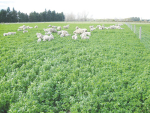
B+LNZ Urges Farmers to Graze Lucerne Hard Before Winter Weed Control
Beef + Lamb New Zealand is reminding farmers with lucerne stands to graze them hard over the next few weeks in preparation for a winter weed control programme.
 increase font size
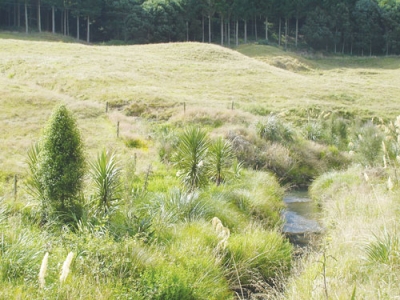 Good riparian areas help keep waterways free of contaminants.
Winter weather can place extra strain on the banks of farm waterways, increasing the risk of erosion degrading water quality.
Since degraded water quality can affect animal health and productivity, protecting these riparian areas from erosion is important for environmental and economic reasons.
So it’s timely to look at the issues involved in erosion generally and less-than-ideal land management that can contribute to contamination of waterways.
Some of our rivers, lakes and streams have eroding banks, silted beds, water weed infestation and debatable water quality, often the result of poor land management.
Such practices, in farming, forestry, roading or horticulture, can cause soil erosion and a build-up of contaminants such as bacteria and chemicals which end up washed into watercourses during heavy rain.
Some of the poor farming practises involved include stock wading in water, poor cowshed effluent treatment, overgrazing, inappropriate fertiliser application and pugging.
Poor runoff control on cultivated land, roads and tracks can also contribute to the contamination of water bodies.
Some of the impacts of poor practices can include potentially serious water-borne diseases like giardia and cryptosporidium. Nitrates and phosphates can also create health disorders for people and stock, and contribute to algal growth. Eroded sediment can hurt water clarity and aquatic life.
However, good management of riparian areas can reduce these types of effects by stabilising the banks and providing a filter for contaminants washing off the land. Effective management of the
banks is a key to protecting aquatic life and improving water quality generally.
A well-managed riparian margin, with a carefully selected mix of species, will filter out contaminants such as sediment and nutrients from farm run-off, including soil, animal dung and urine, and agricultural chemicals.
Shrubs and trees with extensive root systems, which tolerate moist soil conditions and frequent silt deposits, are ideal for stream bank erosion control. They physically hold the stream banks together and some tree roots also protect the streambed, limiting the scouring effect of running water.
Streamside vegetation provides shade which reduces water temperature, improves dissolved oxygen levels, helps aquatic life and reduces the risk of algal blooms.
Suitable plant species beside waterways also provide cover for spawning fish, and food and habitat for nesting and young birds. Such planting helps water plants and invertebrates become numerous, providing a better food supply for fish. Streamside trees can link areas of native vegetation, extending habitat for native birds.
Besides environmental benefits and generally protecting water quality for stock, riparian planting can also help a farm’s economy in various ways.
Well designed riparian fencing can be used to improve subdivision, help with mustering, and protect animals from drowning or getting stuck in wet areas. The provision of shelter and shade is recognised as an important aspect of animal production and health.
Improved milk grades are documented where dairy sheds no longer draw water from contaminated streams. On sheep and beef properties, stock enjoy better health and gain weight faster when water sources are not contaminated.
• Bala Tikkisetty is a sustainable agriculture advisor at Waikato Regional Council. Tel. 0800 800401 or email This email address is being protected from spambots. You need JavaScript enabled to view it.
Beef + Lamb New Zealand is reminding farmers with lucerne stands to graze them hard over the next few weeks in preparation for a winter weed control programme.
Southland farmers are being encouraged to get ahead of the winter grazing season by attending a practical field day in Pukerau next week.
As we approach the winter months it’s important to be prepared for the challenges and uncertainties that come with unpredictable weather events.
More than 600km of Taranaki river and stream banks will be planted with a million native plants next winter as the region’s farmers take advantage of a $5 million government boost.
More than 600km of Taranaki river and stream banks will be planted with almost a million native plants next winter.



Now in its fourth year, the 2026 Fencing Industry Awards, formed part of the proceedings of the FCANZ Conference, held in Nelson during August.

DairyNZ deputy chair Cameron Henderson has been re-appointed unopposed for another term.
OPINION: The stats speak for themselves.
Farms across the upper North Island are trialling different pasture mixes as part of a research programme that aims to build greater resilience into farming systems.
Election years are always a concerning time for farmers, according to DairyNZ chair Tracy Brown.
The Ballance Farm Environment Awards are coming to the West Coast of the South Island.