BVD Control Begins Long Before You See A Problem
Bovine Viral Diarrhoea (BVD) is sometimes viewed as a dairy industry issue, but the reality is that the disease can have serious consequences for beef breeding herds as well.
 increase font size
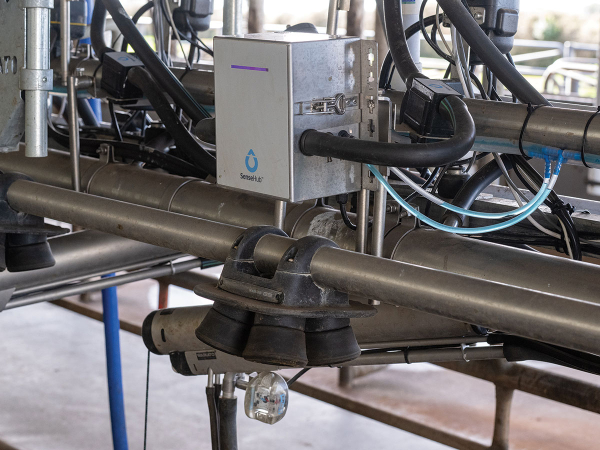 The sensors capture data from each cow at every milking and automatically transfer it to SenseHub software.
Two inline milk sensors are now available on monthly subscription from SenseHub Dairy, adding milk yield and quality insights to the SenseHub Dairy platform powered by MSD Animal Health.
MSD Animal Health business unit lead - technology, Austin Heffernan, says the sensors capture data from each cow at every milking and automatically transfer it to SenseHub software, where it is displayed in user-friendly dashboards and reports.
With individual animal insights, farmers can track trends over time and use the information to support decisions on breeding, feeding, culling and drying off.
Both sensors can be retrofitted to herringbone or rotary sheds milking herds fitted with SenseHub Dairy collars.
SenseHub Dairy MilkPlus Sensors collect yield plus fat, protein and lactose percentages, and also calculate conductivity and check for the presence of blood to help monitor for early signs of udder health issues.
SenseHub Dairy Somatic Cell Count Sensors automatically perform a Rapid Mastitis Test (RMT) within two minutes of cupping for each cow, then send results directly to the SenseHub Dairy platform.
Optical warning lights can be installed at the milking point which turn green, orange or red, depending on the result while each cow is still in the bail, indicating that there may be a potential issue and allowing milking staff to act quickly if necessary.
“The addition of these sensors gives farmers more timely data to make informed decisions around breeding, feeding, culling and drying off their cows,” Heffernan says.
“The data builds a clearer picture of cow performance for a range of indicators, so farmers can act on patterns over time rather than just the snapshot they get from a herd test on one day in a season.”
Early adopters report improved feed management and more confidence in mating and culling decisions.
With more frequent insights, farmers can see how feed changes affect production and intervene quickly when performance shifts.
At mating, the extra data can help identify top performers for high value straws or sexed semen, while supporting decisions to mate lower performers to beef sires.
Users see a dashboard that highlights at-risk cows, and view and download customisable reports which provide deeper insights into the performance of every cow in the herd for a range of milk yield and quality criteria.
“Our tech team is continuing to refine how insights are displayed, with further enhancements planned over the coming year,” Heffernan says
Standard outputs include daily and weekly yield reports and a combined milk solids report that builds over the season.
The Herd Shift Summary report compares each milking result by group against the weekly average, helping managers spot meaningful changes in production by cow, group and shift.
For more information and pricing, visit www.sensehub.co.nz
Bovine Viral Diarrhoea (BVD) is sometimes viewed as a dairy industry issue, but the reality is that the disease can have serious consequences for beef breeding herds as well.

Bovine Viral Diarrhoea (BVD) is sometimes viewed as a dairy industry issue, but the reality is that the disease can have serious consequences for beef breeding herds as well.
Two milking technology providers are joining forces to enhance performance in the dairy shed.
MSD Animal Health has launched its comprehensive milk monitoring solution, under the SenseHub Dairy brand, for herringbone sheds following successful trials on Fonterra’s Te Rapa dairy farm in the Waikato.
MSD Animal Health New Zealand has partnered with Agrecovery in New Zealand’s first pilot to recycle SenseHub Dairy Collars (previously known as Allflex Collars) used by its dairy farmer clients.


Beef + Lamb New Zealand (B+LNZ) says it welcomes the passage of the Natural Environment Bill and Planning Bill, calling the bills a positive step for sheep and beef farmers.
A spate of southerly winds bringing cold temperatures has presented challenges for Taranaki dairy farmers.
Converting a longstanding cropping farm to dairy was the only way to ensure the land stayed in the family long term, says new dairy farmer Rod May.
As the election heats up, Organics Aotearoa New Zealand (OANZ) has launched its election scorecard designed to help voters wanting to support policies that grow organic and New Zealand's organic sector.
A 'tsunami' of milk from key exporting countries is winding down and this may be good news for New Zealand dairy farmers.
Will the good times last? That's one of the key issues to come out of the latest Federated Farmers confidence survey.