Fonterra's Whareroa Wins Directors Award
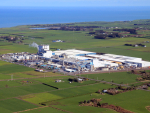
Fonterra's Whareroa site took home the prestigious Directors Award at the co-op's 'Oscars of Manufacturing', while Clandeboye led the way with multiple wins at this year's Best Site Cup.
 increase font size
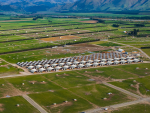
 An aerial image captured by drone.
Living Water partners, Fonterra and the Department of Conservation (DOC), have created much needed 'silt traps' on two of the Waikato Peat Lakes they're working hard to restore.
The silt traps, which Fonterra says are "great looking", are for Lakes Ruatuna and Rotomanuka.
Described as 'critically threatened' under the Land Environments of New Zealand Threatened Environments Classification, peat lakes are globally rare ecosystems.
The Waikato region is home to more than 30 of them.
The Waikato Peat Lakes area is one of five key catchments where Fonterra and DOC work in their Living Water partnership programme.
Living Water Fonterra North Island project manager Tim Brandenburg says the peat lakes are an integral part of New Zealand's landscape, with silt traps a key contributor to restoring lake water quality.
"The majority of pollution comes from sediment and excess nutrients that drain off cleared lands surrounding the lakes. Silt traps are like a vital organ the ecosystem needs to recover – they act like a kidney," says Brandenburg.
"We're artificially creating what would normally happen in nature – when a stream meanders through a wetland, and filters out silt coming downstream."
These culturally and historically important peat lakes are a significant focus for Living Water, as part of its mission to improve water quality and increase the abundance of native wildlife in five catchments where intensive dairying exists.
DOC Living Water Waikato site lead Mike Paviour says, "We've given the lakes the equivalent of a kidney transplant."
"On top of that, we're planting both the silt traps and lake edges with thousands of native wetland plants to provide habitat for native wildlife.
"We're excited to see the native species thrive as habitat becomes established, and we'll be working to improve public access so everyone can enjoy it."
Living Water works with farmers, iwi, hapu, community groups and key stakeholders to improve the abundance and variety of native wildlife and water quality.
The Waikato Peat Lakes catchment includes three lakes where Living Water continues on its mission to help restore Waikato's unique peat ecosystems.
The other Living Water catchments are Kaipara Harbour's Hikurangi catchment, Tīkapa Moana (Firth of Thames) Pūkorokoro/ Miranda catchment, Waikato peat lakes focusing on Lakes Areare, Ruatuna and Rotomānuka, Te Waihora (Lake Ellesmere) in Canterbury focusing on the Ararira LII catchment and Awarua -Waituna in Southland focusing on Waituna catchment.
Fonterra's Whareroa site took home the prestigious Directors Award at the co-op's 'Oscars of Manufacturing', while Clandeboye led the way with multiple wins at this year's Best Site Cup.
After 25 years it is the right time to step away, says Colin Glass, the retiring chief executive of New Zealand's largest private corporate dairying company, Dairy Holdings.
Fonterra is strengthening its foodservice presence in China with the launch of a new cream for professional bakeries at Bakery China 2026 in Shanghai.
OPINION: To a chorus of crying greenies, and not a minute too soon, the Government has moved to put the courts back in their place through proposed amendments to the Climate Change Response Act 2002, intending to limit climate litigation claims such as Smith v Fonterra, in the interests of providing greater certainty for vital industry.
For the third season in a row, Fonterra farmers are in for a farmgate milk price near $10/kgMS.
New Zealand dairy farmers are set to be the first in the world to receive access to a new digital physical milk pricing tool that enables them to fix the price for their physical milk.
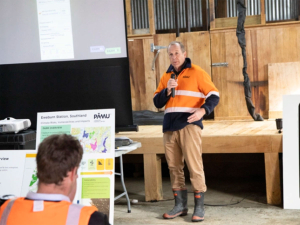
State farmer Pāmu is opening its farm gates this summer in an effort to give the rural sector the opportunity to see how large-scale, multi-system farming is delivering productivity and profitability across New Zealand.
A five-year study has found that the cost of reducing emissions without technology may be significant and unsustainable for Northland dairy farmers.
DairyNZ says Waikato farmers need certainty on Plan Change 1, but they say that certainty must be matched with practical, workable rules and a clear transition that doesn't get ahead of the new resource management system currently under review.
While the Government has moved quickly to make commercial hauliers' lot easier during the current fuel crisis, they appear to be stuck in the creep box when it comes to the agricultural industry.
Waikato farmers have been told that the Government’s new planning system legislation and the region’s Plan Change 1 (PC1) “won’t mesh together very well”.