Climate-friendly cows closer
Dairy farmers are one step closer to breeding cow with lower methane emissions, offering an innovative way to reduce the nation's agricultural carbon footprint without compromising farm productivity.
 increase font size
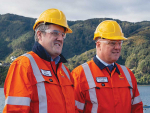
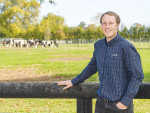
 James Smallwood.
The NZ agriculture sector is more than just a job for CRV Ambreed’s new managing director James Smallwood.
It’s about people doing business with people, says Smallwood, who has had a 30-year career in agribusiness and along with his wife owns a 550-cow dairy farm in Wairarapa.
He is signalling “an open-door” approach to leadership, planning to get out in the field with staff and invite farmers to connect with him one-on-one.
“I know farmers like working with our company and our staff; we’ve built a great working relationship,” he told Dairy News.
Smallwood plans to experience this first-hand.
“A lot of CRV’s success to date is the result of the passionate staff that work here, which is evident in the strong relationships our team has with our farmer customers.
“I can see that the CRV team truly values the reputation it has amongst farmers as a trustworthy partner who listens and understands their farming business. It’s crucial our customers know they can rely on us to work with them to achieve their herd improvement goals, using genetics and data.
“As the newest member of the CRV team, I’m looking forward to getting out in the field, supporting our team and finding out what matters most to our farmer customers.”
Smallwood started his new role last month, following the appointment of Angus Haslett as head of CRV Ambreed’s Dutch parent company, CRV.
Smallwood is only CRV Ambreed’s fourth managing director in the company’s history.
He says he is focused on working with the CRV team to continue offering industry-leading innovations and great products to the company’s farmer customers.
“We want to deliver our products and services to farmers in a way they value and love, so that their businesses benefit, whether that’s through increased production, healthier cows or technology to help them farm better.
“I’m looking forward to helping CRV realise its true potential as one of New Zealand’s leading genetics companies.”
Smallwood points out that CRV Ambreed is more than just an animal breeding business.
Over the years, it has invested in technology and research such as LowN Sires and herd recording software, myHERD – innovations changing the way farmers approach their herd improvement.
He notes that today’s discerning customers have food safety, animal welfare and sustainability on the top of their minds.
Smallwood says technology developed by CRV Ambreed, in collaboration with industry stakeholders, is designed to help farmers become more sustainable and further improve their animal welfare credentials.
He says genetics is playing its part, helping farmers deal with animal welfare issues.
For example, use of CRV Ambreed sexed semen gives farmers more heifers, greater value replacements and fewer bobby calves. The management of bobby calves by the industry has come under scrutiny in recent years.
The company also launched myHERD, a new herd recording application, which replaces CRV Insight. It allows dairy farmers to consolidate their herd recording and farm information on one platform. CRV Ambreed runs myHERD on the FarmIQ platform.
“We are not developing technology ourselves but in partnership with groups like FarmIQ, other industry players and the Government.”
Wairarapa boy
James Smallwood has worked around the world in a variety of leadership positions, which have given him a deep understanding of the primary industries.
Smallwood’s most recent role was based in Melbourne as general manager Australia and New Zealand of ABS Australia (part of global company Genus PLC), providing animal breeding supplies and services to the Australian and New Zealand dairy and beef industries.
Under his leadership the company recaptured its number one market share position in both beef and dairy, after the successful development and implementation of a business rebuilding strategy.
Smallwood was born and bred on a small dairy farm in the Wairarapa. He and his wife have expanded this to a 550-cow operation over the past twenty years. They have also recently developed a dairy beef unit in partnership with their long standing sharemilkers.
He has also served as director of entities including DataGene and Ovita Limited, and has completed the Fonterra Governance Development programme. He has chaired several boards and committees both in the industry and in the wider Wairarapa community.
Dairy farmers are one step closer to breeding cow with lower methane emissions, offering an innovative way to reduce the nation's agricultural carbon footprint without compromising farm productivity.
CRV has produced the first homozygous polled bull to make New Zealand’s prestigious Ranking of Active Sires (RAS) list, demonstrating the strides the company is making in breeding top-quality polled bulls.
As Mycoplasma bovis (M. bovis) resurfaces in Canterbury, CRV is reassuring dairy farmers it has rigorous production processes and health testing programmes in place within its supply chain.
A Canterbury Hereford stud specialising in providing beef genetics for the dairy industry is claiming a major breakthrough in breeding for more environmentally friendly animals, with reduced urinary nitrogen emissions.
Some dairy farmers could be missing out on up to 160 kgMS of production because they are not herd testing.

An Auckland gelato shop and an established New Zealand ice cream maker have both been named Supreme Champions at the NZ Ice Cream & Gelato Awards 2026.

As the cost-of-living crisis continues to put pressure on household grocery budgets, new figures show pork remains one of the most affordable fresh meat options for New Zealand families.
OPINION: In politics, credibility is and should be big. It must surely rank higher than charisma, which is quite trite and superficial. Yet, voters nowadays are often wooed and influenced by how someone looks or talks at a superficial level. TV plays a huge role in this.
Farmers can spend less time on paperwork, thanks to a new data sharing agreement between DairyNZ’s DairyBase and LIC’s MINDA software.
Kaikōura families affected by July's severe storm have found a practical solution to a problem that's kept some children away from regular schooling for weeks: a washed-out section of Inland Kaikōura Road, which has stopped the local school bus from running its usual route.
Rural New Zealand is welcoming the Government’s recent package of rural healthcare initiatives.