Daniel Eb Defends Opportunity's Approach to Rural NZ
The Opportunity Party has faced criticism during the election campaign that its policies are too urban-focused and offer little for rural communities.
 increase font size
 Opportunity deputy leader Daniel Eb
Opportunity says its land value tax (LVT) is unlikely to force farmers into a position where asset sales or increased debt are required.
Speaking to Dairy News, deputy leader Daniel Eb says his party recognises that farming is a boom-and-bust industry, so the policy includes a deferral scheme should it come into effect.
“Prices are really good right now, but they weren’t two years ago, so that mechanism exists in the system,” Eb says.
The general election is set for Saturday, November 7. Several opinion polls suggest Opportunity may be in a front row seat to determine the next government. Some polls even suggest that neither the left nor right political blocs would be able to command a majority without them.
Opportunity’s proposed LVT has drawn the ire of farming groups.
But Eb says that it is important that New Zealand has some form of tax reform.
“The fact is our tax system was designed primarily in the mid-80s, before the fall of the Berlin Wall and before the first text message was sent,” he says. “You cannot continue operating an economy on 40-year-old tax settings. You need to set
tax settings as the world changes around you.”
Opportunity’s proposed LVT would see rural land taxed at 0.5% of its value annually.
The policy aims to discourage land-banking and large property portfolios and redirect money into businesses instead.
“I think it’s important to note that the land value tax sits alongside a citizen’s income,” Eb says. “And we are only proposing that these two are implemented together because you can’t have one without the other.”
He says that, on Opportunity’s projections, a farmer or farming family sitting at or close to the national average sale price of $6-7 million would not see significant changes to the taxes they pay.
“So that’s after you factor in that lower rate for rural land, which is 0.5% as opposed to 1.75% on urban land. That’s after you factor in the citizen’s income, which is effectively a negative income tax rate and significantly reduces your overall tax burden. That’s after you include a carve-out for any privately held conservation land on the farm.”
Eb says that some smaller farms or farms with a lower land value will likely see a tax cut under the policy.
He adds that there is also a plan in place to mitigate the possibility that the cost of the tax would be passed on to tenant farmers through higher lease rates.
“Primarily… we’ve proposed a 10-year transition for this tax,” he says.
Eb says this assumes the party is able to enact the policy within the next Parliamentary term, something he says seems unlikely.
“We’re going to be a minor party with limited influence. So, realistically, once you sort of bake in two election cycles, and then a 10-year transition plan, we’re talking about 2040-something for this to actually come into effect in full. And within the transition plan, we’ve built in a number of checkpoints to see how the market is baking in something like a land value tax.”
He says New Zealand’s land prices – both urban and rural – are overinflated and that is locking young farmers out of farm ownership.
The Opportunity Party has faced criticism during the election campaign that its policies are too urban-focused and offer little for rural communities.
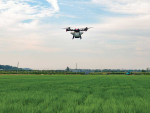
The agricultural aviation industry has reacted angrily to government plans to cut regulations to make it easier for farmers to buy drones and use them on their farms.
OPINION: In politics, credibility is and should be big. It must surely rank higher than charisma, which is quite trite and superficial. Yet, voters nowadays are often wooed and influenced by how someone looks or talks at a superficial level. TV plays a huge role in this.
When Northland farmer Mark Cameron entered parliament six years ago, the Beehive was a lonely place.
I think it's going to greatly weaken National at the election. That's the view of a former senior National MP on the recent attempted coup against Prime Minister Christopher Luxon.



Opportunity says its land value tax (LVT) is unlikely to force farmers into a position where asset sales or increased debt are required.
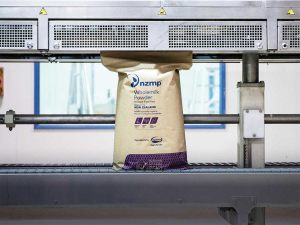
Milk powder prices are keeping farmgate prices up, helping processors offset the dip in milk fat prices.
Climate, nature and animal wellbeing make up Fonterra's refreshed sustainability roadmap released last week.
The Government is introducing a new nationwide rural recycling scheme that will significantly increase the recovery of farm plastics from March next year, Minister for the Environment Nicola Grigg announced today.
B+LNZ's Wormwise veterinarian Mary Bowron has won the Best Sheep and Beef Vet of the Year Award in recognition of her outstanding contribution to New Zealand’s sheep and beef sector.
Researchers at Massey University are using a special piece of scientific equipment to improve the measurement of greenhouse gas emissions from pasture soils.