
Record final milk price for Miraka suppliers
Farmers supplying milk to Taupo-based processor Miraka are getting a 2024-25 season base milk price of $10.16/kgMS.
 increase font size
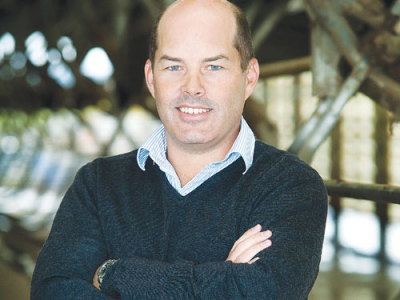 Richard Wyeth.
For the second year in a row, Taupo’s Miraka Dairy company has paid at least $3 million in bonuses to suppliers for their good overall performance during the 2016-17 season.
The company’s programme Te Ara Miraka financially rewards suppliers for meeting five criteria: people, the environment, animal welfare, milk quality and prosperity. Within these are 31 criteria -- 13 of them mandatory for farmers to meet. These in turn are extrapolated out into a points system – all told 100.
A supplier who passes the mandatory ones gets some incentive, but achieving 100 points will bring an extra 20 cents/kgMS at the end of the season pro-rata depending on the points won.
This year a Mangakino farm in the Wairarapa Moana Trust scored 100 and got the maximum bonus. Miraka chief executive Richard Wyeth says the staff on the winning farm worked extra hard and got an outstanding result.
In this second year for Te Ara Miraka the response from Miraka’s 110 suppliers has been greater engagement and adapting to change, he says. Most of the farmers will get some sort of bonus; only a very few will get nothing.
Te Ara Miraka is more than just producing lots of good milk, Wyeth says. It looks after staff, regularly reviews their performance and pays above the minimum wage.
“We see it as an investment in the long term. All the things in Te Ara Miraka mean that onfarm we will deliver better results so it’s an investment in the farmer. Over time, as well as develop our branded business further it will help add value to the brands,” he says.
Wyeth sees the provenance of food becoming a big concern for consumers.
“For example, our Total Pure brand shows our milk is sourced within an 80km radius of the factory and Te Ara Miraka will be built into the brands as well,” he says.
Small but successful
Richard Wyeth knows that a small company can develop a greater sense of community among its suppliers, which the farmers wanted from the outset.
Wyeth says they enjoy the annual shareholders’ meeting, “having conversations with the directors and being able to see people in the street around town”.
“That plays a huge part and for me it’s fantastic being able to see all our suppliers in one place. With 110 suppliers we can take everyone on the same journey at the same time.”
He says performance reviews are difficult for some people, but they have to be done and help is available to get farmers through these.
Change is inevitable and farmers must be prepared for this in a season full of uncertainty.
“We are very comfortable with where we are placed in the industry. Our strategy has been consistent, our plants are full, our suppliers say we have the best UHT plant in the country.
“So we are well positioned to grow but there is more and more change coming to the industry and we just have to be prepared for that.”
Of the ups and downs of the international market, Wyeth says all these will play out over time; they just have to keep an eye on things as they evolve.
“We know it’s going to be more volatile than it was 12 months ago,” he says.
Farmers supplying milk to Taupo-based processor Miraka are getting a 2024-25 season base milk price of $10.16/kgMS.

Open Country Dairy has finalised a deal to acquire 100% of Miraka.
Milk processors are either matching or beating Fonterra's record $10/kgMS opening forecast milk price as the 2025-26 season gets underway.
Māori-owned milk processor Miraka is looking for a new chief executive following the resignation of Karl Gradon last week.
The chief executive of Taupo-based dairy company, Miraka – Karl Gradon - has stepped down from the role for personal and family reasons.



Supply chain problems, growing protectionism and a move to greater food security are some of the key challenges facing New Zealand exporters, according to our top trade negotiator, Vangelis Vitalis.
A spat within the ranks of the New Zealand Deer Farmers Association has resulted in the suspension of outspoken North Canterbury farmer Barry Cuttance.
After delivering a strong financial year, rural trader PGG Wrightson says the coming months will depend on customer confidence and weather.
Beef+Lamb New Zealand and the Ag Emissions Centre have launched a new research project aimed at helping beef farmers reduce methane emissions without impacting productivity or profitability.
The apple sector is working with the Government to unlock access to two key markets that could bring millions in revenue for apple growers.
Celebrating 50 years in the rural landscape of Central Canterbury and beyond, Ashburton-based Carrfields, has been the exemplar for all aspects of modern agriculture via its extensive range of services including supply, growing, agronomic advice and marketing.