What Would Synlait Be Worth to Fonterra or a2 Milk?
Speculation of a possible joint move by Fonterra and a2 Milk to buy Synlait raises a much bigger strategic question, says agribusiness expert Dr Nic Lees.
 increase font size

Fonterra yesterday unveiled the next step in its strategy to build a high-quality, sustainable fresh local milk supply in China, announcing plans to invest $100 million to develop two new large-scale dairy farms in Hebei province.
Chief executive Theo Spierings made the announcement at the official opening of Fonterra's second farm in China - called Yutian Farm One.
Speaking at the ceremony, Spierings said China is a significant priority in Fonterra's refreshed global strategy.
"We have a long history in China and we are committed to the further development of the local Chinese dairy industry. We want to establish an integrated milk business in China that processes high quality milk from Chinese farms into dairy nutrition for Chinese customers and consumers," he said.
With consumption in China expected to double by 2020, the country will be consuming more than 70 billion litres of milk every year by 2020.
"It is clear that much of this growth in demand for dairy nutrition will be met from local production.
"An integrated business all starts with a safe, high quality local milk supply. Our intention is to develop separate farming hubs across China, with the ultimate goal of producing up to 1 billion litres of high quality milk every year by 2020."
Fonterra has already committed investment to five farms in the Hebei Province, in the north east of China.
"Our first farm in Tangshan opened in 2007 and today we are celebrating the official opening of our second farm in the area. Yutian Farm One is currently milking around 2200 cows and producing around 11 million litres a year. At full capacity it will reach 30 million litres of high quality milk a year.
"Construction of our third farm, also at Yutian County, is underway and today we are also announcing that we will be investing NZ$100 million (RMB557 million) in a further two farms in the same Province.
"This will mean we will have a hub with five farms within the area. Combined, they will have a herd size of around 15,000 milking cows producing 150 million litres a year and all nearby a large market like Beijing.
"We will be using local suppliers, partners and contractors to build our two new farms and when all five farms are up and running we will be employing around 500 local staff to operate them. This investment will flow right through the local economy."
Spierings said the success of Fonterra's farming operations in China, and their future growth would not be possible without the support of local Government.
"The Government of Yutian County of China has played an integral role in the development of our farms in the region. These partnerships will continue to be vital as we expand our presence in China over the long term and work with local players to further develop the local industry."
Fu Zhenbo, Magistrate of Yutian County said: "Fonterra's investment in dairy farms in the region is helping to further build Yutian's reputation as a key national agriculture demonstration zone. The farm is positive for the future development of Yutian as a dairy farming region.
"Today's announcement of further investment will play a significant role in continuing to develop the security, quality and sustainability of our locally produced milk."
Speculation of a possible joint move by Fonterra and a2 Milk to buy Synlait raises a much bigger strategic question, says agribusiness expert Dr Nic Lees.

In the past, much has been made of the concept of farm to fork, but an Australian expert in food science and marketing with experience in the dairy industry, Dr Angeline Achariya, says the reverse of this slogan is critical to win modern day consumers.
A four year trial has reaffirmed that mixing plantain into dairy pastures can help reduce nitrogen losses to freshwater while maintaining milk production and profitability, say researchers.
Fonterra has opened its upgraded Chengdu Application Centre, bringing New Zealand dairy expertise closer to customers in one of China's fastest-growing regions.
Tatua chair Stephen Allen says he leaves the co-op with a deep sense of gratitude for the people who have contributed to its success.

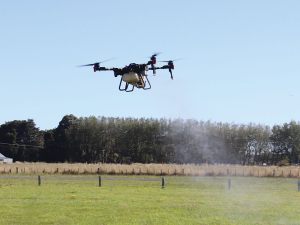
OPINION: David Seymour and James Meager's plan to make it easier for farmers and orchardists to operate drones can best be described a 'courageous' move.

New Zealand wool is reaching new heights as air filtration companies move away from synthetic products to biodegradable alternatives.
Opuha Dam's ability to protect South Canterbury communities from major flooding has taken a significant step forward, with Opuha Water Limited (OWL) successfully commissioning a new outlet valve capable of releasing record volumes of water from the dam ahead of a weather event.
There's been widespread support from the primary sector for the Government's announcement on changes to freshwater farm plans that come under the Natural Environment Bill, which is now set to replace the existing RMA.
A partnership between state-owned enterprise Pāmu (Landcorp Farming Limited) and charity Meet the Need is putting more than quality New Zealand beef into food bank parcels this year.
The Opportunity Party has faced criticism during the election campaign that its policies are too urban-focused and offer little for rural communities.