BVD Control: Why One Measure Isn't Enough for NZ Herds
Bovine Viral Diarrhoea (BVD) remains one of the most significant infectious diseases affecting New Zealand dairy herds.
 increase font size
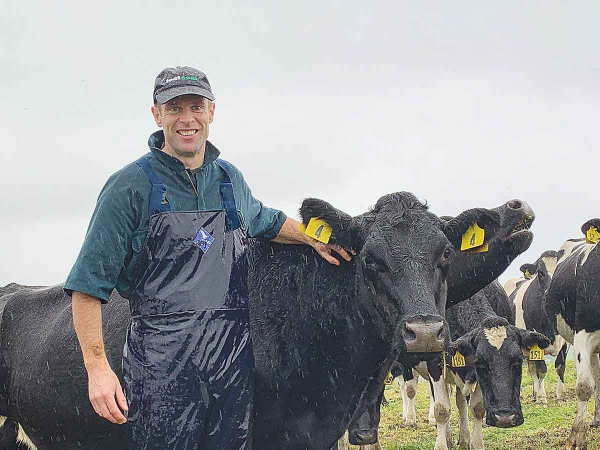 Greg Chambers, Zoetis veterinary operations manager.
A disease equally infectious to Mycoplasma bovis and Covid-19 is threatening farm profitability and livestock health.
Bovine Viral Diarrhoea (BVD) is estimated to be costing the New Zealand dairy industry at least $150 million a year in animal health costs and lost production, yet experts agree, with a focused campaign it could potentially be eliminated in a matter of months, not years.
Greg Chambers, Zoetis veterinary operations manager, has been working closely with vets and farmers this year to help raise the profile and understanding of BVD.
He says despite what farmers may think, BVD is both contagious and common among dairy herds.
“It is far from being random or rare. But often BVD is mainly a subclinical disease, and its symptoms get lost amid the usual health outcomes farmers see quite regularly within their herd.
“These can include immune suppression causing more infectious disease, early embryonic death, abortion, elevated somatic cell counts, birth defects – all can appear random, but can actually all be tied back to BVD, such is the wide range of conditions it can create.”
Despite being such an insidious background disease, BVD can be controlled with a few steps revolving around testing, culling, vaccination and farm biosecurity.
Testing for BVD is a well-established practice in New Zealand dairy herds. Bulk milk sampling provides a good pathway for vets and farmers to determine its presence, then commence identifying and culling individual infected herd members.
“Testing and culling to get a clear result is good. But often no further action is taken once that is achieved, and only when the next BVD-infected animal is detected is the disease addressed again.
“It is a bit like using your smoke detector to tell you your house is on fire- by the time that alarm has gone off the fire has got hold and the damage is already done.”
He has been focusing on reinforcing the need for farmers to build biosecurity and vaccination into their animal health plans to prevent the test going positive.
“As a farmer, you really need to use the twin tools of vaccination and good farm biosecurity to keep BVD out, otherwise your efforts are going to be constantly eroded with it returning- it’s like trying to build a sandcastle when the tide is coming in.”
Vaccination wraps a layer of insurance around the herd’s health.
“It’s really like investing to fireproof the building, to stop fire taking hold again and the alarm going off again.”
Research looking over the past decade at BVD infections indicates over time more and more herds that may have contracted BVD and been cleared become naïve to the disease, and once again are susceptible.
“We have had infected herds drop from about 15% to 5% in only a few years, which is good. But it also means without vaccination those herds are sitting ducks for becoming susceptible again.”
Amid heightened concerns over M. bovis, more farmers have been careful about where they send young stock, and many also vaccinate that stock against BVD.
“But while protecting your young stock is worthwhile, focusing on your breeding herd is probably even more important.
“It is from them you get your Persistently Infected (PI) calves, from where it can spread quickly.”
Timely BVD vaccination of cows prior to mating will ensure no PI calves are born that spring, helping break a cycle of infection.
Both the symptoms and the $150 million cost to the dairy sector of BVD are difficult for affected farmers to identify.
“The cost of at least $150 million is an average of $32 a cow a year, but it can seem to be a zero-cost disease if you are just interpreting the many different symptoms as unrelated health issues in the herd.”
The per head cost of BVD far outstrips the cost to vaccinate, and Chambers says vaccination could play an invaluable role in helping New Zealand eradicate the disease.
“If as a country we can deal to Covid-19, and as an industry deal to both M. bovis and BVD, it will do much for New Zealand’s biosecurity standing and enhance the dairy sector’s profitability.”
Bovine Viral Diarrhoea (BVD) remains one of the most significant infectious diseases affecting New Zealand dairy herds.

Bovine Viral Diarrhoea (BVD) is sometimes viewed as a dairy industry issue, but the reality is that the disease can have serious consequences for beef breeding herds as well.
Running a tight and self-contained ship is the key to the success of the country's largest dairy farmer, says Blair Robinson, the new man at the helm of Dairy Holdings.
Solid biosecurity practices, regular monitoring and timely vaccination are the three key pillars of effective Bovine Viral Diarrhoea (BVD) control on New Zealand farms. Zoetis veterinary technical advisor, Karley DeFrees, explains BVD is a costly but preventative disease that impacts a significant number of dairy farms in New Zealand. Implementation of a BVD control plan can help protect your herd from this avoidable disease.
Bovine Viral Diarrhoea (BVD) is estimated to cost New Zealand's dairy and beef industries more than $150 million every year, yet many of the tools needed to control it are already well understood. After more than 25 years in veterinary practice, Andrew Weir, animal health technical specialist at LIC, has seen firsthand the impact BVD can have on herd performance. We asked him about the role of persistently infected (PI) animals and the practical steps farmers can take to reduce their risk.


An Auckland gelato shop and an established New Zealand ice cream maker have both been named Supreme Champions at the NZ Ice Cream & Gelato Awards 2026.

As the cost-of-living crisis continues to put pressure on household grocery budgets, new figures show pork remains one of the most affordable fresh meat options for New Zealand families.
OPINION: In politics, credibility is and should be big. It must surely rank higher than charisma, which is quite trite and superficial. Yet, voters nowadays are often wooed and influenced by how someone looks or talks at a superficial level. TV plays a huge role in this.
Farmers can spend less time on paperwork, thanks to a new data sharing agreement between DairyNZ’s DairyBase and LIC’s MINDA software.
Kaikōura families affected by July's severe storm have found a practical solution to a problem that's kept some children away from regular schooling for weeks: a washed-out section of Inland Kaikōura Road, which has stopped the local school bus from running its usual route.
Rural New Zealand is welcoming the Government’s recent package of rural healthcare initiatives.