It's The Margins That Matter
OPINION: It appears to be difficult for people who haven’t tried to run a business to understand the difference between assets and cash.
 increase font size
 Jacqueline Rowarth.
The nostalgia button is being pushed with releases of chocolate bar flavours from the past, milk in traditional glass bottles and constant references to food “as it was meant to be”.
All natural is in vogue, whatever people think it means. And chemophobia is increasing despite the fact that life is based on chemicals.
Recent media articles have suggested that if you can’t pronounce the name of a chemical on a food packet it is likely your body cannot deal with it. A rebuttal to this from Professor Alison Campbell at the University of Waikato listed the ingredients that occur in bananas. Certainly 3-methylbut-1-yl ethanoate can be synthesised in a laboratory, but it also occurs naturally in bananas. It is responsible for the distinctive smell and is an important component of banana lollies and anything else banana flavoured.
The point is that whether a chemical is natural or synthetic indicates nothing about its effect on the body -- good or bad or even toxic.
Nor does eating food products known to have a high concentration of, for instance, anti-oxidants, mean that the food will make a difference to your health. How many anti-oxidants are in your diet already? Is the amount being added to your diet significant? How much is needed to have an effect?
Starting points and relativities are being overlooked in much of life.
When it comes to the environment, we seem to be forgetting that to international visitors we are a lucky country – water we can almost always drink from a tap or swim in, sky that is not smogged out, nearly 30% of the country in the Department of Conservation estate and the 38th lowest tax burden in the OECD.
The large protected areas are supported by the economy and its growth over the past few years, rather than increases in taxation.
This is the current reality.
Nostalgia, the yearning for an idealised past, used repeatedly in marketing, prevents us from remembering what the past was really like as it filters out negative emotions. In evoking the past – for instance, the memory of childhood summers (long, hot and carefree) or first loves (deep, meaningful yet not-to-be) for instance -- we recreate what we would have liked it to be.
The future lies in protecting the environment while achieving a net balance approach to economy and hence lifestyle. The Environmental Protection Authority (EPA) was created in 2011 to help ensure that balance between environment and economy is maintained.
The EPA’s vision is “an environment protected, enhancing our way of life and the economy”. The balance reflects the fact that without an economy, New Zealand’s way of life is threatened – whether that way of life involves the arts or external recreation, or both, deterioration occurs unless there is an income allowing support.
The relationship is recognised in the Food and Agriculture Organization definition of sustainability.
It acknowledges that unless an activity is economically viable, it isn’t sustainable.
However, the business that enables financially viable production and protection of the environment must also be socially acceptable. Any decision on sustainable management of physical resources must also enable people and communities to provide for their social, economic and cultural well-being. Transparency is also part of the goal so that people can see why decisions are being made.
Nostalgia is confusing the issues in NZ, as it is in many developed countries where facts, evidence and data are being superseded by opinions and beliefs.
Unless we maintain a balanced approach to the environment and economy, we will find ourselves with the living standard of the past and the reality is unlikely to be anything like as rosy as remembered.
• Jacqueline Rowarth is chief scientist at the Environmental Protection Authority
OPINION: It appears to be difficult for people who haven’t tried to run a business to understand the difference between assets and cash.
OPINION: In the 1980s, concern was expressed in West Germany about the falling birth rate. Some simple analysis was performed by Professor Helmut Sies, physician and biochemist at Dusseldorf University. His letter ‘A new parameter for sex education’ was published in Nature in 1988:
OPINION: Humans are resilient. We are part of nature and have evolved for survival.
OPINION: Is New Zealand ‘Godzown’ or the ‘Last bus stop on the planet’?
OPINION: "The worst thing that agriculture does is take land from nature."



Now in its fourth year, the 2026 Fencing Industry Awards, formed part of the proceedings of the FCANZ Conference, held in Nelson during August.
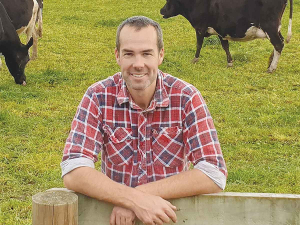
DairyNZ deputy chair Cameron Henderson has been re-appointed unopposed for another term.
OPINION: The stats speak for themselves.
Farms across the upper North Island are trialling different pasture mixes as part of a research programme that aims to build greater resilience into farming systems.
Election years are always a concerning time for farmers, according to DairyNZ chair Tracy Brown.
The Ballance Farm Environment Awards are coming to the West Coast of the South Island.