Biosecurity Ranked Top Priority In KPMG Agribusiness Agenda 2026
According to new research, industry leaders have ranked world-class biodiversity as the number one priority for the 16th year in a row.
 increase font size
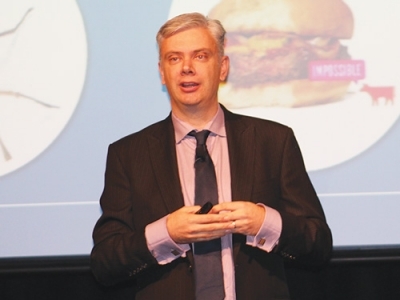 Ian Proudfoot, KPMG's global head of agribusiness.
Books and music company Amazon is moving into food and you can't ignore the power it will have, says Ian Proudfoot, KPMG's global head of agribusiness.
Amazon reckons in 42 US cities it can deliver fresh food to the front door within one hour – often faster than going to the supermarket.
"We won't be going to the shops, we will be using our phones to buy food, meaning we can interact much more directly with who is growing our food," Proudfoot told the NZ Veterinary Association conference in Hamilton.
Coca-Cola has bought a dairy company, pharmaceutical companies are moving into food and we are on the cusp of a financial and cultural revolution, he says.
"The biological technologies, the physical technologies, the digital technologies are creating a whole heap of new solutions."
KPMG asked 80 of the world's largest agribusiness countries what were the key opportunities and challenges facing their businesses. Volatility, trade agreements, natural resources, changing consumers, technology and climate change emerged as key themes.
"We are not getting the climate change theme nearly as much as they are across the world. The shift to low carbon economy is gaining pace, as is food safety. That is probably most important for your industry."
NZ has grown magnificently and achieved a great productivity level, but "the reality is what we do today will not be enough to get us where we need to be tomorrow," Proudfoot says.
People will farm in different ways and with different business models. Philadelphia Cow Sheds is an example: it crowd sources (i.e. sells an interest in an animal upfront); you buy an eighth of an animal, you'll get an eighth of that meat when that animal is slaughtered.
"In 25 years... we won't see supermarkets as we see them today. They will evolve and change."
Businesses like My Food Bag will be part of that change. It has recently disrupted itself by launching a 'bargain box' cheaper than its mainline product offering.
"We have for so long focused on the average, but the reality is the average doesn't exist. What we need to be thinking about is, what are the niches we are directing our services towards?"
We can segment our communities many ways now: age, gender ethnicity – and religion will be an important sector in the future. By 2030, 3.8 billion people will be members of various religions.
A growing part of the population will be the elderly who will be managing health conditions. "Things are changing very rapidly in food; we are on the cusp of the fourth industrial revolution."
According to new research, industry leaders have ranked world-class biodiversity as the number one priority for the 16th year in a row.

A New Zealand firm’s ice-free champagne cooler has hit Amazon’s number one seller position in its category across the
United States, United Kingdom, Australia and Canada.
Biosecurity remains the top priority for agribusiness leaders, according to KPMG’s 2025 Agribusiness Agenda released last week.
Biosecurity remains the top priority for agribusiness leaders, according to KPMG's 2025 Agribusiness Agenda released last week.
OPINION: In the same way that even a stopped clock is right twice a day, economists sometimes get it right.


Federated Farmers says it welcomes Labour's commitment to reviewing the Sharemilking Agreements Act, calling on other major parties to do the same.
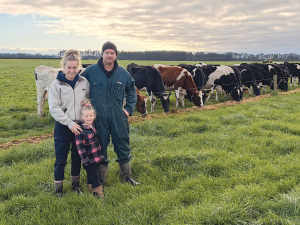
For Canterbury dairy farmers Sian Meijer and Rick Wobben, wearable technology has become one of their most valuable on-farm tools - helping manage 1850 cows across an expansive, high-performing dairy operation while improving efficiency, mating outcomes and day-to-day decision making.
Fonterra has unveiled its annual results for the 2026 financial year, posting $27 billion in revenue and close to $20 billion returned to New Zealand farmer owners and unit holders.
The first major update to the Dairy Cattle Code of Welfare in more than a decade has been released, marking what DairyNZ describes as an important step in ensuring animal welfare standards continue to evolve alongside scientific evidence and on-farm realities.
Ravensdown shareholders have elected Jane Montgomery and Kate Acland to the Ravensdown Board for three-year terms, following a closely contested director election.
Federated Farmers says new legislation replacing the Resource Management Act will cut red tape, unlock investment and help grow New Zealand's export-led economy, after the Planning Bill and Natural Environment Bill passed their third reading in Parliament yesterday.