Farmer slams GM review as going "too far, too fast"
A Hawke’s Bay fruit and vegetable grower has described the Government’s plan to review regulations around genetic modification as rushed.
 increase font size
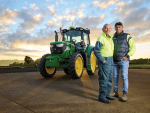
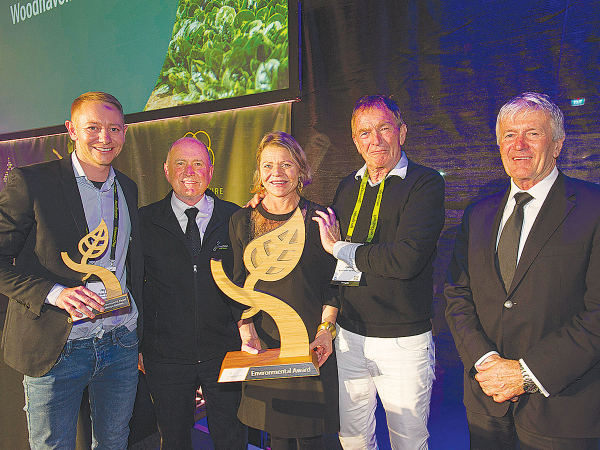 Woodhaven Gardens director Jay Clarke (left), HortNZ chair Barry O’Neill, Emma Clarke, managing director John Clarke and Agriculture Minister Damien O’Connor at the Hort awards night.
For one of the country’s largest vegetable growers, sustainable farming has always been a priority.
Horowhenua-based family business, Woodhaven Gardens, has always tried to be sustainable “in the true sense of the word”, according to director, Emma Clarke.
“For us, sustainability has been looking after all four pillars – environment, social, cultural, and economic,” she told Hort News.
At the recent HortNZ conference, Woodhaven Gardens picked up the Environmental Award. On hand to receive the award was founder John Clarke and his children, Emma and Jay.
The judges noted that Woodhaven Gardens are leaders in sustainable growing, investing significantly in reducing environmental impact, adopting a science-led approach that balances conservation with commercial success.
“The Clarkes are leaders in research for the vegetable industry – contributing time, money and land in order to measure and provide evidence.
“Their largescale fresh vegetable growing operation is driving change in environmental sustainability, shifting growing areas to reduce nitrogen loss and minimise the impact on freshwater quality.”
Woodhaven Gardens are no strangers to winning awards; last year they were named the 2020 regional supreme winner at the Horizons Ballance Farm Environment Awards.
“It is frustrating given the fact we now have won multiple awards both environmental and business – yet we are unable to get consent in our region due to the process being stalled yet again,” she says.
The 720ha Woodhaven Gardens was established in 1978 and has been family owned and operated since.
Based just south of Levin on the fertile plains of the Horowhenua, it employs over 260 people at the peak of the Zucchini season.
Clarke says they grow a full range of product – more than 20 different types of vegetable, ranging from fennel and celeriac to green and red cabbage, broccoli, and lettuce.
“We do a naked vegetable as well as pre-packing those products that are highly vulnerable to shrinkage such as spinach, silver beet and Chinese vegetables.”
Sustainability remains a work in progress, but a lot of the “grunt work” has been done.
“Science in this space is progressing and we are partnering with both Massey University and others to help progress some of this work,” she adds.
Woodhaven was the first vegetable operation in the country to roll out the New Zealand GAP Farm EMS programme – an independently audited farm plan based of scientifically proven best environmental farm practice.
The business has effectively retired close to 20% of the farm to grass swales (riparian planting), as well as introducing cut-and-carry grass and maize production.
“A relatively small, unproductive part of the farm has been planted in pines, and we’ve now come up with a simple yet hugely effective way of dealing with our water discharge from our main wash-and-pack facility.”
Looking forward, Clarke says sustainability will remain a priority despite challenges facing them.
She says they face many challenges, some unique to the horticulture sector and others that most businesses will face.
Labour security, changing policy and compliance – both from central and local government, customer and supermarket price expectation and lack of elasticity in an environment where production and operational costs are ballooning are some of the challenges on her list.
“It is a changing climate and we are learning how to adapt our practises to maximise opportunities and to minimise adverse effects,” she says.
Woodhaven Gardens
A Hawke’s Bay fruit and vegetable grower has described the Government’s plan to review regulations around genetic modification as rushed.
Growing fruit and vegetables contributes to New Zealand's agricultural greenhouse gas emissions. At Woodhaven Gardens, near Levin, Jay Clarke and his family have been figuring out how to reduce their impact on the climate.
Pukekohe Vegetable Growers Association's (PVGA) first woman president, Kylie Faulkner, was extremely surprised and honoured to receive the President's Trophy at the recent Horticulture New Zealand Conference.


Federated Farmers has welcomed new rural policies released by ACT, saying they align closely with its own election priorities.

Rural Contractors NZ says proposed changes to land transport rules for agricultural vehicles are a welcome response by the Government to out of date regulations which have seen members hit with huge fines.
Alliance is calling for final applications for its 2027 Graduate Programme, with applications closing on Sunday 25 October.
Decades piloting planes has ensured vet and farmer David Hayes is focused on safety. So, after a serious accident while welding on farm, he is sharing his experience so others can learn from it.
Canterbury milk processor, Synlait Milk has confirmed Leon Fung as its chief executive officer.
OPINION: Making it easier to collect rainwater and use it to grow crops and livestock is a no brainer.