The subdivision and sale of the Rangiora's Coldstream Estate in 1921 was advantageous for not one, but four Cantebury families - but one in particular has become synonymous with outstanding Holstein Friesian cattle.
The Robinson, Stalker and Tull families were the successful bidders at the auction held at the Choral Hall, Christchurch where the Coldstream Estate - described in the newspaper as "undoubtedly one of the finest blocks of dairying and cropping land in New Zealand" - went under the hammer.
However, two years later in 1923 Arthur and Janet Stewart became the owners of 49 acres (19.8ha) of this fertile land, just south of the Ashley River.
Arthur tried his hand at growing crops, but they kept getting washed out. Janet tried her hand at milking cows, with much greater success; the farm started supporting a herd of black and white cows in 1929.
Although they weren’t pedigree Holstein Friesians at that point, they did well to turn a profit. Arthur was even the first farmer in the district to put in spray irrigation, in the 1930s.
Arthur’s grandson and current farm owner Graham Stewart says irrigation has been key to the success of the farm.
“The land is very good at growing grass in the summer,” he says.
Arthur’s son Gordon founded the Cresslands stud in 1953, with the purchase of his first pedigree Holstein Friesians: from the Royal Oak herd of DB Robinson of Waikuku, the animals carried strong Rosevale and Elmwood bloodlines. Foundation cattle also came from DB Mehrten’s Weir Bank herd at Oxford, also carrying Elmwood genetics. Gordon had been encouraged into pedigree stock by Cecil Humm, from whom he purchased a part of the Glenhope property 20 years later.
Gordon also used Supplementary Register females to build up his herd.
Gordon was passionate about dairy industry matters and was considered a key contributor in the overhaul of the classification system.
At the time of his HFNZ Council presidency in 1989-1990, negotiations were underway with the dairy breeds and Livestock Improvement Council to emphasise the importance of animal conformation when it came to sound, long-producing stock.
Gordon, Brian Knutson and Brian (Buster) Burton worked with these organisations and from their discussions, the TOP system - now largely accepted by the dairy industry and breed societies - evolved.
After slowly becoming increasingly responsible for the day-to-day running of the farm, Gordon’s son Graham took over the farm in around 1988 – and it has grown exponentially in the time he has been at the helm.
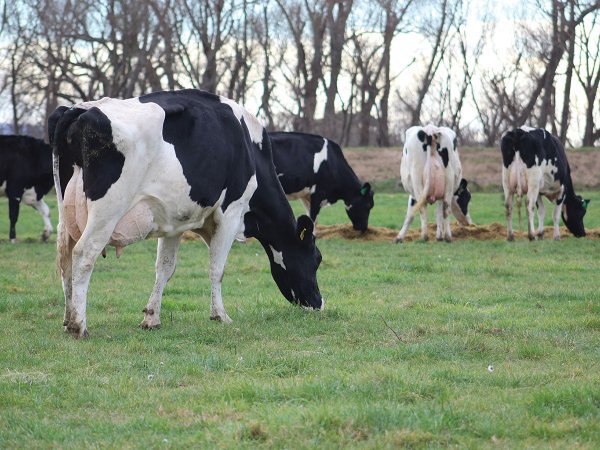
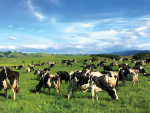
Today, Graham and wife Nicky milk 500 cows on a 140ha milking platform, having increased cow numbers by 20% with the addition of part of the neighbour’s farm last season.
The herd is split calved, with 300 milking in the winter and 500 over summer.
The day-to-day running of the dairy side of the business is split between Graham, son Andrew and the farm’s manager. Andrew spends most of his time managing tasks such as feeding out, fertiliser, the run-off block, maize, crops, re-grassing and irrigation.
Graham uses all North American genetics over the herd, focusing on breeding a complete cow that is good looking and efficient; a true-type quality that has been at the front of the family’s breeding strategy since Gordon established the stud.
While the ‘T’ and ‘P’ families are an established part of the herd, none have flourished quite so much as the ‘D’ family, which can be traced back to the first Herd Book, with a cow named Milkmaid of Brundee.
Andrew also enjoys taking stock to local and major shows, including the Holstein Friesian South Island Championships, gaining much pleasure and satisfaction in the showring.
Many Changes Over The Years
Graham Stewart says the farm and business have seen many changes over the years.
“Technologically, things have changed dramatically – we now have collars and drafting that help pick up sick cows and draft them for mating,” he says.
“And the tasks we used to do by hand – cutting hay, forking silage – we just couldn’t do now, with 500 cows. Isn’t technology a wonderful thing!”
Farm infrastructure has changed. In addition to irrigation upgrades – the farm now utilises three centre pivots, as opposed to hard pipes – they are on the third milking shed in 100 years, a herringbone.
But Graham says the biggest change has been in cow numbers.
“When I started working on the farm we had 120-150 cows, and that was a big herd,” he remembers. “Now, a 500-cow herd is an average herd.”
“We’ve probably had access to worldwide genetics for 30-plus years, but it’s so easy now,”