Fonterra FY26 Results: $9.69 Milk Price, $3.4bn Profit
Fonterra has unveiled its annual results for the 2026 financial year, posting $27 billion in revenue and close to $20 billion returned to New Zealand farmer owners and unit holders.
 increase font size
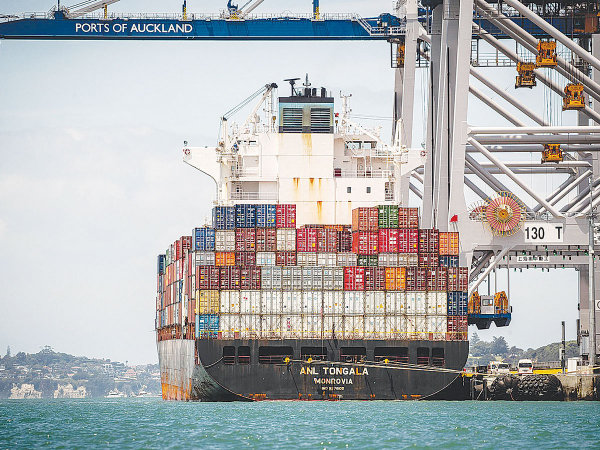 Joint shipping venture Kotahi - a collaboration between Fonterra and Silver Fern Farms - has a partnership with Maersk.
Supply chains throughout the world are under pressure but Fonterra is making its logistics well, says chief operating officer Fraser Whineray.
He says joint shipping venture Kotahi - a collaboration between Fonterra and meat processor Silver Fern Farms formed after the 2007-8 global financial crisis - is helping New Zealand exporters continue sending food to overseas customers.
Kotahi now has over 50 customers and exports one-third of New Zealand's container traffic.
Whineray told the Smaller Milk and Supply Herds (SMASH) conference in Cambridge recently that Kotahi has a partnership with Maersk, the biggest container shipper globally. Kotahi is one of the shipping company's top three customers.
It has helped Fonterra and other NZ exporters move products and empty containers around the world and avoid storage-related costs.
"And when you are in trouble, because we don't swing $50 million across over the rail of a ship every day, you don't invoice it, and you can build up a working capital and storage [at] a heck of a rate of knots, you need partners that you can trust. Maersk is absolutely that," says Whineray.
"It's been very important for NZ to get imports in, empty containers in, so that we can ship stuff out. It's tight but it's going well for us."
Fonterra's half-year results in May showed that the co-op was eight days behind on shipping, an equivalent of $400m working capital.
So, getting products off rail is as important for the co-operative as picking milk up from farms.
Whineray says shiping routes can get jammed up pretty quickly. He doesn't expect the current global shipping woes to go away soon.
"The supply chain won't relieve for a while: what it needs people to stop spending as much money on goods.
"They should only spend a little or they should spend on services or something made in their own countries or in Europe and America."
Whineray explained that it wasn't the Covid bug that was impacting global shipping.
"It's not because ships can't sail. Everything that floats is trying to work the Pacifc pretty hard," he says.
Stimulus packages by the US and European governmnets mean people in these countries are staying at home with lots of money to spend.
And because they can't attend sporting events, festivals or do tourism, they are spending it on household items like TVs and upgrading homes on "a global simultaneous splurge". And this, Whineray says, is putting global shipping well beyond its maximum capacity.
"And when that happens, you get two weeks wait of Port Long Beach in California (US's second busiest cargo port)," says Whineray.
"At one point there it was faster to go through Panama Canal and offload on the East Coast, because it's a big going from China to the US and China to Europe, which now has shipping rates on a spot basis six times higher than what they were."
Fonterra has unveiled its annual results for the 2026 financial year, posting $27 billion in revenue and close to $20 billion returned to New Zealand farmer owners and unit holders.
Fonterra Co-operative Group has confirmed the independently assessed candidates standing for election to its board in 2026.
Fonterra has revised its Farmgate Milk Price forecast for the 2026/27 season, lifting the midpoint and narrowing the range on the back of improving global dairy commodity prices.
Outgoing Fonterra Co-operative Council chair John Stevenson says that it has been a privilege to represent the co-op's farmer shareholders.
OPINION: It seems Canterbury processor Synlait is still in the doldrums.


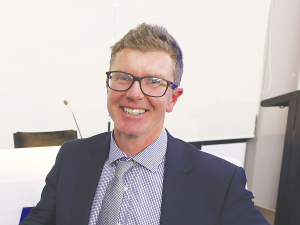
LIC shareholders have elected a new North Island representative to the co-operative's Board, along with five representatives to its Shareholder Reference Group (SRG), following the company's Annual Meeting held in Invercargill.
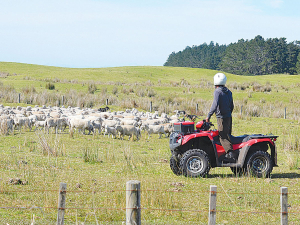
Farmers across parts of Southland and South Otago are continuing to deal with difficult conditions after a prolonged run of wet weather, with pressure building around feed supply, stock management, pasture damage, farm infrastructure and everyday workloads.
Federated Farmers says it welcomes Labour's commitment to reviewing the Sharemilking Agreements Act, calling on other major parties to do the same.
For Canterbury dairy farmers Sian Meijer and Rick Wobben, wearable technology has become one of their most valuable on-farm tools - helping manage 1850 cows across an expansive, high-performing dairy operation while improving efficiency, mating outcomes and day-to-day decision making.
Fonterra has unveiled its annual results for the 2026 financial year, posting $27 billion in revenue and close to $20 billion returned to New Zealand farmer owners and unit holders.
The first major update to the Dairy Cattle Code of Welfare in more than a decade has been released, marking what DairyNZ describes as an important step in ensuring animal welfare standards continue to evolve alongside scientific evidence and on-farm realities.