Post-quake study reveals hort potential
Large areas of North Canterbury and South Marlborough – affected by the 2016 Kaikoura Earthquakes – offer wide potential for horticulture.
 increase font size
 Don Galletly shows the damage to his rotary shed.
Don Galletly’s Loch Ness dairy farm on the Emu Plain, near Waiau, remains the only one in North Canterbury unable to milk in the wake of the November 14 quake.
While farms either side were back up and operating within a few days, Galletly’s rotary shed is deemed a write-off.
“Three-quarters of the season is down the drain for us,” he says.
Loch Ness lies on the north bank of the Waiau river, opposite the Waiau and Rotheram townships. The farm covers 500ha, about 300ha as the milking platform and the rest as wintering runoff.
Some dry stock remains on the runoff but the milking herd of just under 1000 animals has been moved to other farms. With little prospect of income he has had to let his staff go. Some might get casual work on the farm, others he is helping to find other positions.
The shed and adjacent concrete pad are riddled with large cracks and the rotary platform lies about 30cm off-centre. Steel fences set in the concrete look fine at first but on closer inspection are bent and twisted, as is the steel roof.
“We’re working through the insurance but it looks as though it will be a rebuild.”
A geotechnical inspection may yet determine that the new shed will have to be built on firmer ground.
“But they’re pretty positive that they’ll get a shed up for me before next season,” says Galletly.
The farm’s effluent ponds are also damaged, one left out of shape because the shingle base shifted and collapsed towards the centre, under the plastic lining.
Galletly says working through the quake damage has been a long process. His first priority has been making sure all the staff living on the farm are safe, then the cows.
By lunchtime on the first day his bank manager, farm adviser and vet had arrived and helped get the milking stock away to other farms, mostly in the Culverden area.
Next was the stock water systems for the remaining dry stock, followed by fencing.
“Then we’ve been worrying about irrigation for the past fortnight really. We’ve basically got it running again.”
Galletly now gets no income from the cows moved off-farm, but he’s happy to know they’re being milked, and mated – the farm was about half way through AI when the quake hit -- and he’s looking forward to getting them back when the time comes.
“They’ve taken them to make sure those cows get milked and looked after. They need to be milked; it’s pretty hard on them if they aren’t milked – mastitis and all sorts of things.”
“So it’s pretty good of those jokers to take them on a few hours notice.”
Galletly says he has to be positive and look at the silver lining.
Large areas of North Canterbury and South Marlborough – affected by the 2016 Kaikoura Earthquakes – offer wide potential for horticulture.
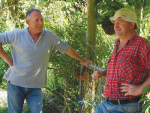
Two years on from the devastating November 2016 Kaikoura earthquake, Kaikoura dairy farmer Graham Collins says he is getting used to “the new normal”.
A New Zealand Winegrowers’ research project, funded by MPI, is hoping to take the lessons from the 7.8 Kaikoura earthquake to build a more resilient industry for the future.
Three months on from the huge November 2016 earthquake the badly damaged land on one farm near Waiau is still settling and moving – but the house isn’t.
Port Nelson has been a key infrastructure asset for the top of the south for decades but its importance to Marlborough is becoming even more significant, following last year’s 7.8 earthquake.


LIC shareholders have elected a new North Island representative to the co-operative's Board, along with five representatives to its Shareholder Reference Group (SRG), following the company's Annual Meeting held in Invercargill.
Farmers across parts of Southland and South Otago are continuing to deal with difficult conditions after a prolonged run of wet weather, with pressure building around feed supply, stock management, pasture damage, farm infrastructure and everyday workloads.
Federated Farmers says it welcomes Labour's commitment to reviewing the Sharemilking Agreements Act, calling on other major parties to do the same.
For Canterbury dairy farmers Sian Meijer and Rick Wobben, wearable technology has become one of their most valuable on-farm tools - helping manage 1850 cows across an expansive, high-performing dairy operation while improving efficiency, mating outcomes and day-to-day decision making.
Fonterra has unveiled its annual results for the 2026 financial year, posting $27 billion in revenue and close to $20 billion returned to New Zealand farmer owners and unit holders.
The first major update to the Dairy Cattle Code of Welfare in more than a decade has been released, marking what DairyNZ describes as an important step in ensuring animal welfare standards continue to evolve alongside scientific evidence and on-farm realities.