Leaders connect to plan continued tree planting
Leading farmers from around New Zealand connected to share environmental stories and inspiration and build relationships at the Dairy Environment Leaders (DEL) national forum in Wellington last month.
 increase font size
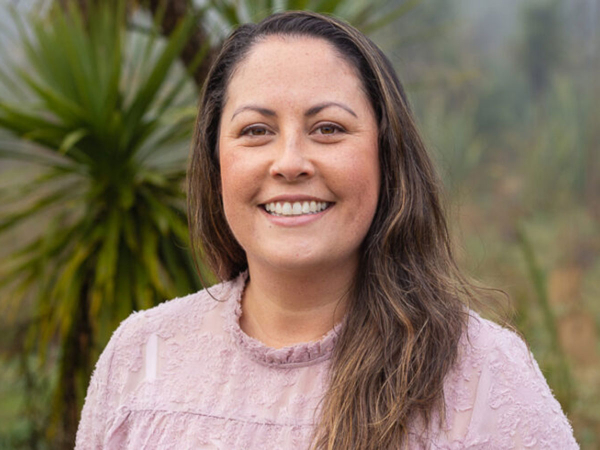 Amber Carpenter.
This week, more than 100 farmers, policy makers, politicians and other industry influencers will gather at the annual Dairy Environment Leaders (DEL) Forum to workshop positive environmental change for New Zealand dairy.
DEL is a multi-generational network of dairy farmers accelerating practical environmental progress across the sector.
“Across the country, dairy farmers are proving that sustainability and profitability go hand-in-hand. Our goal is to leave the land better than we found it for future generations. It’s a long game, but it’s also good business,” says Amber Carpenter, chair of DEL and a dairy farmer from Hunua.
“Smart environmental decisions improve efficiency, reduce waste and risk, and help protect our licence to operate in a market that increasingly rewards low-impact food production. All the small changes each day and each season add up to a bigger overall impact. Together we can make a huge difference.”
Supported by DairyNZ, the DEL Forum brings together some of New Zealand’s most innovative farming leaders to share on-farm learnings, explore the latest research, and advance restoration and environmental stewardship.
Over the years DEL has mobilised thousands of farmers to take action on their farms and in their communities to improve environmental outcomes for all New Zealanders.
DairyNZ Chair (and former DEL chair) Tracy Brown says the industry is building for the future, and capacity, resilience and environmental improvements must be part of that growth.
“It’s a good time to be in dairy right now. We’re discussing how we can grow, while improving our environmental footprint. We face an important test: meeting our climate, water quality and biodiversity expectations while continuing to supply the world with high-quality food. However, future capability and capacity remain concerns, with the average age of our workforce at 58,” says Tracy.
“DEL provides a pathway. Its members demonstrate leadership across multiple generations and show the strength of collective action. The network spans farmers in their 20s through to their 80s, all working to improve the land and motivate others to deliver on environmental goals. Environmental action is no longer the work of a few outliers, it’s becoming business-as-usual on farm.”
The DEL forum is taking place at Museum of New Zealand Te Papa Tongarewa in Wellington from Tuesday 24 to Thursday 26 March.
Alongside interactive seminars covering technology, community engagement, government relations, pan-sector strategy and trade, participants will hear from: award-winning South Taranaki dairy farmer Brendan Attrill (on balancing environmental stewardship with profitability); DairyNZ strategic consultant Bruce Thorrold (on 30 years of agricultural evolution); Ministry of Foreign Affairs and Trade Divisional Manager (Trade Policy Engagement & Implementation) Barney Riley; former Special Agricultural Trade Envoy Hamish Marr; and Parliamentary Commissioner for the Environment Simon Upton.
Leading farmers from around New Zealand connected to share environmental stories and inspiration and build relationships at the Dairy Environment Leaders (DEL) national forum in Wellington last month.
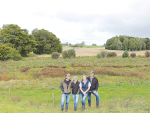
Te Awamutu dairy farmers Doug, Penny, Josh and Bayley Storey have planted more than 25,000 native trees on the family farm, adding to a generations-old native forest.
Dairy Environment Leaders (DELs) chair and Hunua dairy farmer Amber Carpenter says connections help the dairy sector and research partners develop climate and water quality mitigation strategies.
Ask Amber Carpenter about dairy farming and you'll hear the passion in her voice as she answers.
When it comes to sustainability, everyone on a dairy farm has a part to play, according to the new chair of DairyNZ's Dairy Environment Leaders (DEL), Amber Carpenter.



Now in its fourth year, the 2026 Fencing Industry Awards, formed part of the proceedings of the FCANZ Conference, held in Nelson during August.
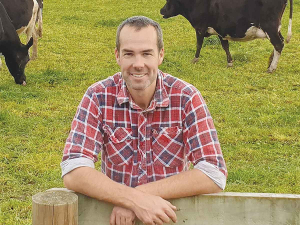
DairyNZ deputy chair Cameron Henderson has been re-appointed unopposed for another term.
OPINION: The stats speak for themselves.
Farms across the upper North Island are trialling different pasture mixes as part of a research programme that aims to build greater resilience into farming systems.
Election years are always a concerning time for farmers, according to DairyNZ chair Tracy Brown.
The Ballance Farm Environment Awards are coming to the West Coast of the South Island.