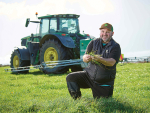
Dairy Industry Pushes to Protect the "Dairy" Term
The global dairy industry is fighting back against alternative proteins masquerading as dairy products.
 increase font size
 Emma Higgins, RaboResearch
Demand for dairy products over the next two decades will increasingly be shaped by demographic shifts, rather than population growth alone.
That’s the view of RaboResearch senior dairy analyst, Emma Higgins.
She believes fewer babies, a ballooning elderly population and a growing young group in pockets around the world could determine what types of dairy products will be required.
This also means dairy exporters will need to home in on groups of people rather than the general population to meet demand for specific products.
Speaking at the World Dairy Summit in Auckland last week, Higgins noted that some of the data shows that dairy consumption is already coming from more per person, as opposed to more people.
Firstly, the world is likely to see fewer babies around most regions of the world by 2050, except for Africa, and Gulf states.
“Most other regions – such as Southeast Asia, Mexico and India – are likely to see double digit declines in annual births by 2050,” she told Dairy News.
With fewer babies in different parts of the world, Higgins says we are also likely to see more older people around the globe.
Leading this change will be South Korea, where the median age is projected to rise from about 47 in 2025 to almost 58 in 2050, overtaking Japan by 2040.
And at the same time, about 30% of China’s population could be in the over 65-year category by 2050.
The third shift, according to Higgins, is Africa essentially being the growth era, or the growth countries.
“So, that’s the three demographic shifts that we’re likely to see over the next 25 years – less babies, older people in many parts of the globe, and then a young and growing population in Africa.
“And we’re likely to see three different types of markets for dairy demand.”
According to Higgins, the dairy industry will need to consider actually what type of customer they’re trying to target in what type of market, because each customer in each market will need very different things.
“For the older and shrinking market, it will be around how can you pack nutritional density into a consumer base that has much smaller appetites, smaller households.
“For the aging and growing market, it will be to understand what that consumer - is it around bone density, is it around sports, is it around nutrition, or is it around the wellness category?
“The third market will be around building a new demand base, which is a great opportunity for the industry.”
But this will require certain things to happen and allow a higher per capita consumption.
“The first is around higher incomes, because there is that correlation between higher incomes, consuming more.
“And then the second thing is really around access to dairy. Products need to be shelf stable where cold-chain infrastructure is limited, or we need to see the cold supply chain effectively developed.”
Higgins says overall demand for dairy is looking good.
She adds that the dairy industry players that can really ride the new wave, will be the ones that genuinely understand the client and what they’re looking for.
For New Zealand dairy exporters, China remains the number one market, but Higgins believes southeast Asian markets – like Thailand, Indonesia and Philippines – also offer great potential.
“Southeast Asian markets are large markets that are likely to offer dairy demand potential, although the drivers differ. Indonesia and the Philippines populations are likely to grow over the next 10 years, while Thailand’s growth will likely depend on higher consumption per person.”
The global dairy industry is fighting back against alternative proteins masquerading as dairy products.

Fonterra chief executive, Richard Allen says being resilient has helped the dairy industry overcome extreme volatility in recent years.
The International Dairy Federation’s World Dairy Summit has returned to New Zealand after sixteen years.
A 'tsunami' of milk from key exporting countries is winding down and this may be good news for New Zealand dairy farmers.
The avocado sector is entering the new season with a larger crop and positive market opportunities.

Demand for dairy products over the next two decades will increasingly be shaped by demographic shifts, rather than population growth alone.
The global dairy industry is fighting back against alternative proteins masquerading as dairy products.
Fonterra farmers are happy to see the board tackle the issue of shares from former milk suppliers.
New Fonterra Co-operative Council chair Greg Collins says they will continue to ask questions and encourage suppliers to connect with their co-operative.
Milk powders are continuing their merry run on the Global Dairy Trade (GDT) platform, firming up a $10-plus milk price for this season.
This year's Rural Medical Immersion Programme (RMIP) students have finished their placement year in South Taranaki, and all three are staying in Taranaki for their next placement.