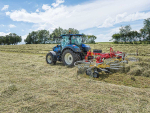
Fall Armyworm in NZ Maize: Four Years of Research
Four years since it was first detected in New Zealand, researchers and growers now know much more about management of maize pest fall armyworm (FAW).
 increase font size

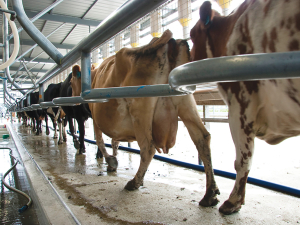
DURING THE last few years there has been a rise in the number of in-shed feeders being used on New Zealand dairy farms. This method of feeding cows has a number of advantages in convenience, low wastage and the ability to control per-cow intake of concentrates.
Feeding the right supplement through your in-shed feeding system will ensure that you maximise milk returns and supplementary feeding profitability.
Processed maize grain is an excellent choice. Maize has a higher energy content than other grains and many other commonly available concentrates.
It can be used to increase cow energy intakes, delivering more milk or faster condition score gains.
Information published by DairyNZ shows that milk production is determined by the amount of energy a cow eats but the composition of the milksolids she produces is affected by the type of supplement fed.3
When cows are fed a starch or sugar-based supplement, they produce more milk protein.
When cows are fed a fibre based supplement, they produce more milk fat.
Since milk protein is worth two to three times more than milk fat, starch and sugar based supplements will deliver more milk revenue than fibre-based supplements.
As well as containing more energy than other concentrates (e.g. dairy meal, other grains), maize grain has advantages for rumen health.
It has a high starch content but virtually no soluble sugar.
Maize starch is less rapidly broken down in the rumen than other starch types.
This means there is a lower risk of acidosis (grain overload) when feeding maize grain compared to other grains (e.g. wheat) or high sugar feeds (e.g. molasses).
Maize grain feeding rates will vary depending on the age and production level of livestock and the amount and type of other feeds in the diet. General recommendations for cows are:
Feed a maximum of 30% of the total drymatter intake as maize grain.
Start at lower rates (e.g. 1kg maize grain per cow per day and increase feeding rates gradually over 7-10 days).
Feed a maximum of 2.5kgDM maize grain in a single feed.
Feeding rates will be lower in diets that contain other sources of carbohydrate (e.g. other grains or meals, molasses or high sugar or starch byproducts).
Maize grain is an ideal supplement for pasture-fed calves and young stock promoting rapid rumen development and excellent liveweight gains.
Processed maize grain can be purchased as required from most local grain companies.
For more information:
Tel. 0800 746 633
• Ian Williams is a Pioneer forage specialist. Contact him at This email address is being protected from spambots. You need JavaScript enabled to view it.
1 Feed values taken from Holmes et al. 2003. Milk Production from Pasture, Massey University, NZ.
2 Palm kernel extract feed value taken from Kolver E. 2006. PKE – Economically priced supplement. Dexcelink Autumn 2006. Dairy Meal energy content is an estimate only.
3 Adapted from Roche and Hedley, 2011. Supplements – the facts to help improve your bottom line. DairyNZ Technical Series July, 2011 p 6-10. Assumes grazing residuals of 1,500-1,600 kgDM (7-8 clicks on RPM). Responses decline when residuals are higher than 1,600 kgDM (i.e. cows are better fed). For a full list of assumptions see http://www.dairynz.co.nz/file/fileid/37671.
Four years since it was first detected in New Zealand, researchers and growers now know much more about management of maize pest fall armyworm (FAW).
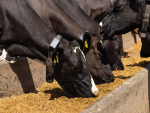
As spring calving cows head into dry-off, the priority shifts to one thing: setting cows up to calve at the target body condition score (BCS).
Early December marks a key transition for many dairy farmers, as weaned replacement heifers head off-farm to grazing.
I recently had the pleasure of attending an AgFirst event in Hamilton where the results of the 2024-25 Waikato-Bay of Plenty Dairy Financial Survey were shared. Based on a 136ha farm milking 379 cows, average farm profit before tax was $405,892, an incredible 286% increase on the 23-24 season.
Over the past few months, I’ve had the privilege of speaking with many farmers at events and one-on-one.


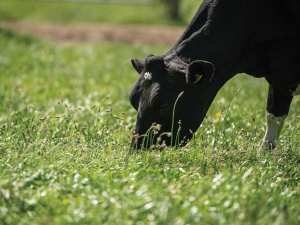
Farms across the upper North Island are trialling different pasture mixes as part of a research programme that aims to build greater resilience into farming systems.
Election years are always a concerning time for farmers, according to DairyNZ chair Tracy Brown.
The Ballance Farm Environment Awards are coming to the West Coast of the South Island.
Most dairy regions around the country have had a pretty good season so far says Tracy Brown.
Rural leader Mark Hooper has been appointed as an independent director to the NZPork board, bringing extensive farming, governance and advocacy experience to the role.