Boosting Crop Production by Spreading Effluent
Tararua district farmer Jamie Harris milks around 400 cows using a split calving system on his farm, Crossdale Dairies.
 increase font size
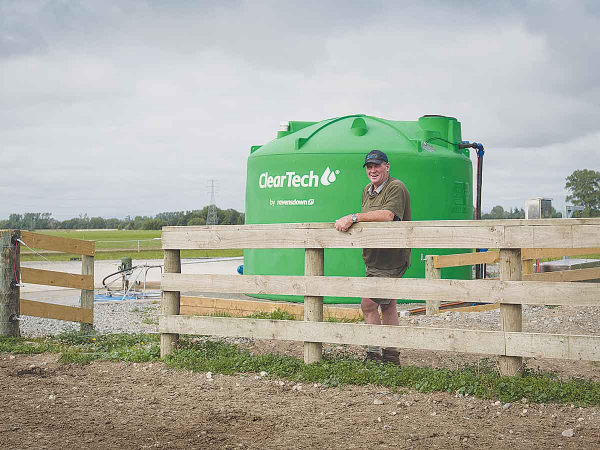 Ravensdown’s ClearTech system uses a coagulant to bind colloidal particles together to settle them out from the water.
For South Canterbury dairy farmers Neil and Margaret Campbell, installing a ClearTech effluent treatment system has yielded a wide range of positive impacts on their 240ha farm.
Thorneycroft, an 800-cow property near Geraldine, borders the water collection zone for the township. It was while working with Ravensdown Environmental to renew his farm consents that Neil says the idea of installing a ClearTech unit came about.
“The science was a plus with the information we were putting together with our consents to farm, which is why we pursued the ClearTech system for that particular farm,” he says.
Developed in conjunction with Lincoln University, Ravensdown’s ClearTech system uses a coagulant to bind colloidal particles together to settle them out from the water. This clarifying process reduces the environmental and safety risks linked with farm dairy effluent (FDE). It kills 99% of E. coli bacteria in the clarified water and reduces the risk of phosphorus leaching in the FDE applied to pasture.
Stripping out the E. coli and other bacteria in FDE means freshwater use is reduced, while effluent storage capability is increased. The clarified water is used to wash down the dairy yard and irrigated back onto paddocks.
By reducing the amount of FDE by around two-thirds, ClearTech offers Neil a proactive solution to the environmental issue of spreading effluent to pasture near the township.
He’s also noted better water conservation and increased time efficiencies for staff on-farm, particularly with their travelling irrigator system for effluent spreading.
“The less material we have to spread with that, the less labour is required,” he notes.
Neil’s seen firsthand how much easier it has made things for the staff on Thorneycroft, and his advice for anyone thinking about ClearTech is to ‘go for it’.
“There are so many positives with it and the science is all there behind it.”
Tararua district farmer Jamie Harris milks around 400 cows using a split calving system on his farm, Crossdale Dairies.
Water management is an integral component of sustainable farming practices, according to Watermetrics.
Two farmers and two farming companies were recently convicted and fined a total of $108,000 for environmental offending.
A Taupiri farming company has been convicted and fined $52,500 in the Hamilton District Court for the unlawful discharge of dairy effluent into the environment.
Founded in Germany as recently as 1977, today, the Fliegl Group employs more than 1100 workers, offering an expansive range of transport solutions, from their base in Bavaria.


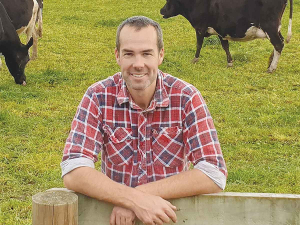
DairyNZ deputy chair Cameron Henderson has been re-appointed unopposed for another term.
Farms across the upper North Island are trialling different pasture mixes as part of a research programme that aims to build greater resilience into farming systems.
Election years are always a concerning time for farmers, according to DairyNZ chair Tracy Brown.
The Ballance Farm Environment Awards are coming to the West Coast of the South Island.
Most dairy regions around the country have had a pretty good season so far says Tracy Brown.