Rural Lobby Groups Seek Clear Election Positions On Farming And Emissions
Centre right parties are backing policy positions pushed by three farmer lobby groups ahead of the general election.
 increase font size
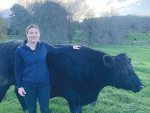
South Waikato farmer Helen Mandeno recently delivered a speech at Beef + Lamb NZ's annual meeting in Nelson. She spoke in support of her remit on B+LNZ seeking majority consensus from levy payers before advancing policies that may threaten NZ's pure, grass-fed and non-GE status. Here's part of what she said:
I believe strongly that the potential risks to human and animal health and the risk to our industry reputation of altering the rumen of our ruminants through methane vaccines, methane boluses, feed additives and GM grasses is of such huge consequence that all NZ farmers should get a say in this decision.
NZ farmers will be asked to spend time and money on products that will deliver no tangible benefit to their farming systems whatsoever, except perhaps giving them a 'license to farm' in the sense of 'being seen to be reducing ruminant emissions'. Reductions in global temperatures due to these measures will be impossible to measure because they are totally insignificant.
What I find really concerning is that Beef + Lamb and Federated Farmers were very quick to embrace discussions around GMO grasses, methane vaccines, feed additives, methane boluses and any other 'biotech tool' that alters the rumen of the gut without seeking clearance from farmers. The subject of genetic modification and/or gene editing can be an emotive and polarising topic. Many times people have an opinion that is based on very little scientific understanding or they may resort to 'group think' without knowing what they are truly supporting.
Regarding methane vaccines: while vaccination for unwanted diseases is a common practice, an additional vaccination that has no benefits to the animal and that targets a naturally occurring rumen organism could well face consumer, regulatory and animal welfare hurdles.
I urge great caution on this journey of fast-tracked novel biotechnology tools.
There is huge risk for very little gain. Advancing biotechnology in the name of climate change is only ever going to serve those with commercial interests in the biotech companies. Trying to trim millionths or even thousandths of a degree warming, which is a temperature difference virtually impossible to measure, is both illogical and unjustifiable. The benefits are an expensive illusion.
Centre right parties are backing policy positions pushed by three farmer lobby groups ahead of the general election.
OPINION: Soon New Zealand farmers will be asked to know their greenhouse gas (GHG) number. There are a vast number of GHG calculators available, all giving a different answer and none of them allowing for your pasture to be viewed as a CO2 ‘sequesterer’.
OPINION: The good times felt across the dairy sector weren't lost at last week's Beef + Lamb NZ annual meeting.
Beef + Lamb New Zealand (B+LNZ) is calling on livestock farmers to take part in a survey measuring the financial impact of facial eczema (FE).
Beef + Lamb New Zealand (B+LNZ) chair Kate Acland says there are clear governance processes in place to ensure fairness and transparency.


The Royal New Zealand College of General Practitioners (the College) and Hauora Taiwhenua Rural Health Network are calling for investment in a proposed new training pathway for rural GPs, warning that many rural practices are struggling to recruit while a large share of the existing workforce nears retirement.
Federated Farmers has called on Central Otago District Council (CODC) to drop or vote down a plan to truck sludge from Alexandra and Cromwell to farmland near Lauder, warning it would compound an "outrageous" situation created by a separate council's decision weeks earlier.
Synlait has swung to second-half profit as operations stabilise, but the dairy processor still posted a $75.4m annual loss.
LIC shareholders have elected a new North Island representative to the co-operative's Board, along with five representatives to its Shareholder Reference Group (SRG), following the company's Annual Meeting held in Invercargill.
Farmers across parts of Southland and South Otago are continuing to deal with difficult conditions after a prolonged run of wet weather, with pressure building around feed supply, stock management, pasture damage, farm infrastructure and everyday workloads.
Federated Farmers says it welcomes Labour's commitment to reviewing the Sharemilking Agreements Act, calling on other major parties to do the same.